
Dry Film Lubricant Coatings

PTFE Coatings & Other Dry Film Industrial Coating Specifications
The first dry film lubricants used graphite or molybdenum disulfide as a lubricant that was mixed into an epoxy or other liquid resin. As industry demanded longer lasting, particularly highly corrosion resistant dry film lubricants, microencapsulation of the lubricant particles allowed specialized Military specifications (see MIL specs) with very high corrosion resistance. These sophisticated lubricant coatings work by allowing slight ablation or particle dispersion at the surface of the industrial coating. Very high load capacity is achievable. However, liquids can disperse the lubricant particles.
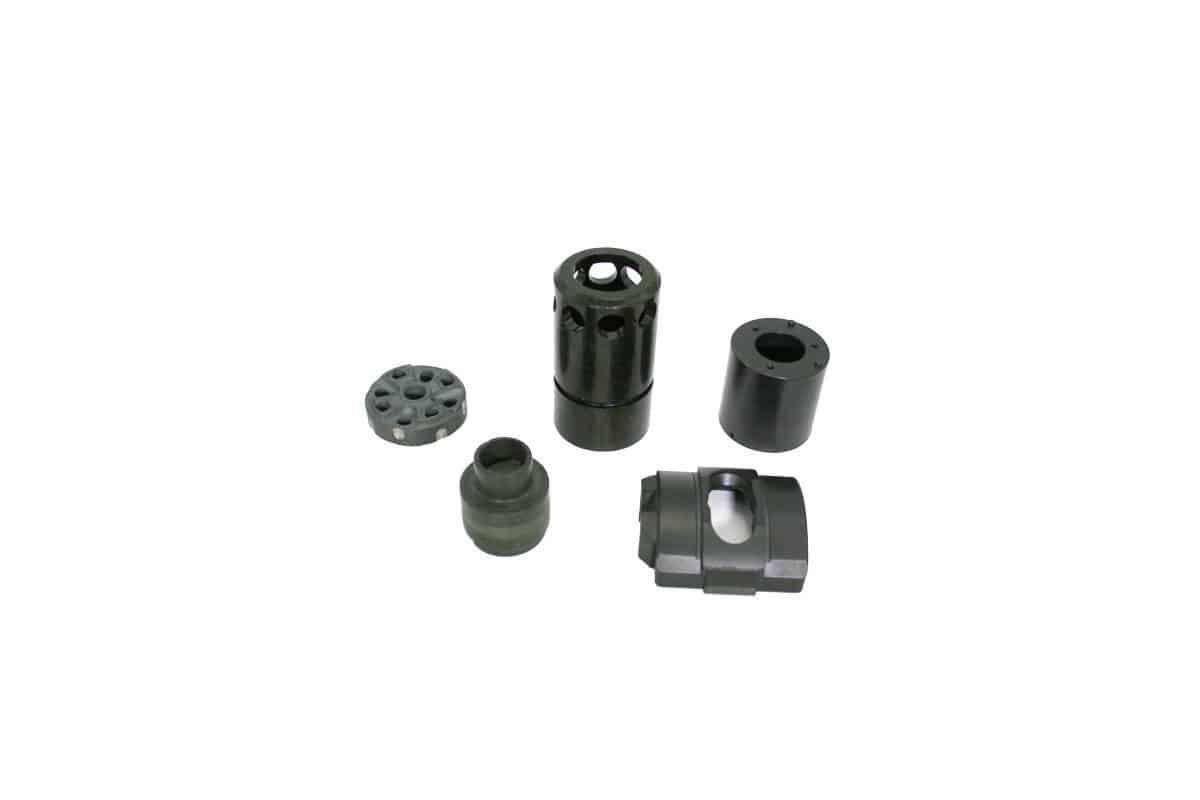
Typical applications are firearms, aircraft sliding surfaces, automotive door hinge pins, solenoid plungers, seat belt cams, and many dry applications.
The latest development of PTFE coating services and other solid lubricant particles in a liquid resin which is spray and oven cured much like the original dry film lubricants. However, these new materials do not disperse particles and use particles of materials like PTFE, PFA, carbon whiskers, polymer fibers, and many synthetic particles, including diamonds that are low friction and abrasion resistant. These non-abrasive dry film lubricants function either dry or wet. Many automotive parts are now coated with these new industrial coatings like air conditioner pistons, cables, supercharger rotors, rubber and plastic components, shock absorber pistons and rod guides.
- Chemours
- Acheson
- Gleitmo
- DuPont
- Sandstrom
- Everlube
- Kluber
- PPG/Whitford
- Orion Industries
Contact us to speak with an engineering consultant about dry film lubricants for your project.